


Sowing Seeds of Memory: The Forgotten History of Afro-Mexicans
Sowing Seeds of Memory: The Forgotten Harvest of Black Mexcio
–by Greg Fuller, Founder of Unlocking Our Voices
A Vision Rooted in Wheat
“I Juan Garrido, Black resident of this city [mexico], appear before Your Mercy and state that I am in need of making a probamza to the perpetuity of the king, a report on how I served Your Majesty in the conquest and pacification of this New Spain…And also because I was the first to have the inspiration to sow maize here in New Spain and to see it it took: I did this and experimented at my own expense”
— Juan Garrido, September 27, 1538.
Long before I ever set foot in Mexico City, that line lived in my head like a seed waiting on rain. A Black man, once enslaved, once a conquistador, standing before the Spanish crown asking simply to be remembered.
Not for gold. Not for conquest.
But instead to be remembered for planting the first wheat.
For the audacity of planting something new in a land that was never supposed to call him a son.
I have carried that image with me since 2015, the year I first set foot in Mexico. I did not know then that I would return again and again, that one of my daughters would be born Afro-Mexican, or that one day I would stand in the same soil Garrido once tilled, asking the same question he seemed to be asking five centuries ago.
Will anyone remember I was here?
Arrival in a City Wearing Two Faces
It was the rainy season in July, and the 2026 World Cup euphoria had taken over Mexico City. I landed at Aeropuerto Internacional Benito Juarez de la Ciudad de Mexico at 1:30pm. Into the kind of traffic that makes a grown man question his life choices, made worse by a tournament that had turned the entire capital into one long celebration.
I am no stranger to this chaos.
I feel a pull towards this land that I still cannot fully explain, except to say that Mexico was the first country outside Jamaica that I ever felt like home.
For once I did not walk through wealthy neighborhoods bracing for an American Karen to ask me who I was visiting. I was not sized up as a threat before I said a single word. For the first time living outside the United States, I felt something close to safety.
I was seen, and more than that, I was recognized — for the richness of my dark skin, yes, but just as much for the knowledge I carried from years of reading about Mexico’s Black sixteenth century.
And yet, as Mexico prepared to celebrate 205 years of independence from Spain this September 16th, one question kept circling back to me like a mosquito at a barbecue:
Where are all the Black Mexicans?
Walk through Mexico City in 2026 and you could be forgiven for thinking Africans never set foot here at all.
That is one of history’s great magic tricks — not the disappearance of a people,
but the disappearance of the memory of them,
while their blood still runs through the country’s veins.
A Nation With Black Hands
Here is what the magic trick hides: Africans were not only present in the founding of Mexico.
They were essential to it.
Juan Garrido is the name history remembers best, largely because he did what most Black men of his era could not.
He left a paper trail.
Taken from West Africa, enslaved in Spain, freed by means historians still debate to this day.
Garrido sailed to the New World and spent thirty years as
what scholars now call a Black conquistador.
He fought alongside Hernán Cortés in the conquest of Tenochtitlan.
He later settled in Mexico city, earned an encomienda, and – in his own words — became the first man to experiment with sowing wheat and maize on this side of the Atlantic.
A man once treated as property, quietly deciding what would grow on a continent.
He was not alone.
Historian Matthew Restall’s research on Black conquistadors describes a whole category of African men — free, freed, or fighting toward freedom— who marched beside the Spaniards through the Caribbean, South America, and New Spain, and who received land and recognition for it, however unevenly.
Juan Valiente was one of them.
A man who negotiated a share of conquest profits with the very man who once owned him, and used that share to purchase his own freedom.
Call it the sixteenth-century version of negotiating your own contract while still on somebody else’s clock.
Enslaved men bargaining with empires for their own humanity — if that is not audacity, I don’t know what is.
What Survived the Archive
What Garrido planted five hundred years ago never stopped growing. It grew into generations that stand today.
Garrido and Valiente are the names that survived the archive.
But the archive was never the whole story — it was just the part the Spanish crown bothered to write down.
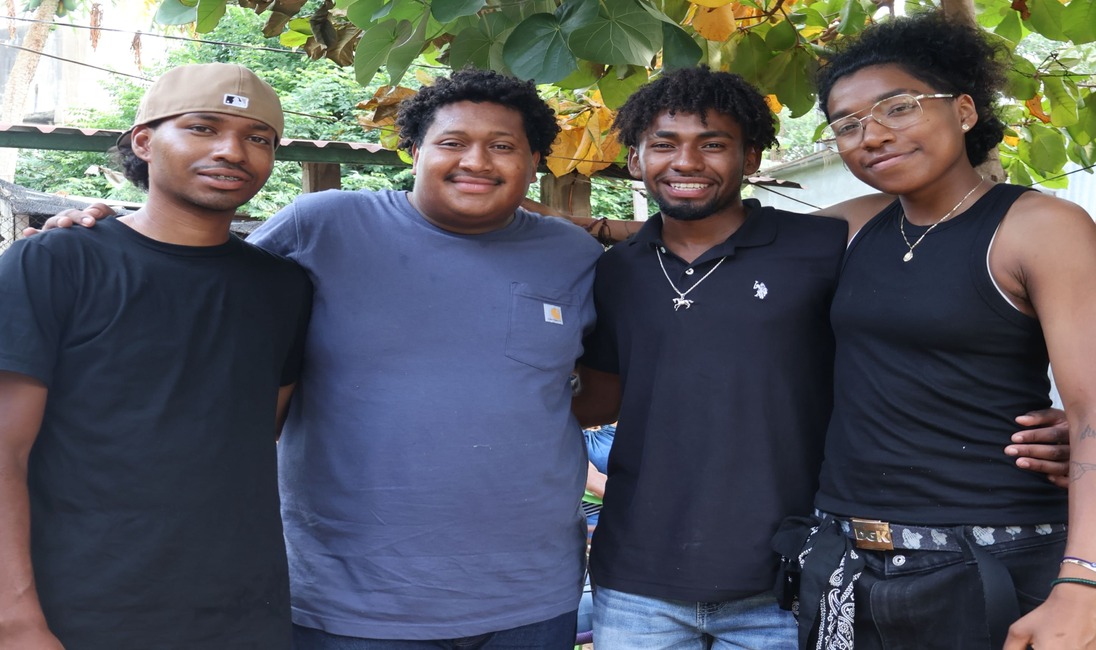
The rest of the story didn’t get preserved in a ledger. It got preserved in a bloodline, passed down along the Pacific coast, in the towns and villages where Black Mexico simply kept living, generation after generation, whether the history books noticed or not.
That’s Oaxaca’s Costa Chica.
— the same coastal corridor where African, Indigenous, and Spanish lines braided together after the conquest, and never fully unbraided again.
Five hundred years after a man bargained his freedom out of a colonizer’s hands, these are the hands his freedom bought.
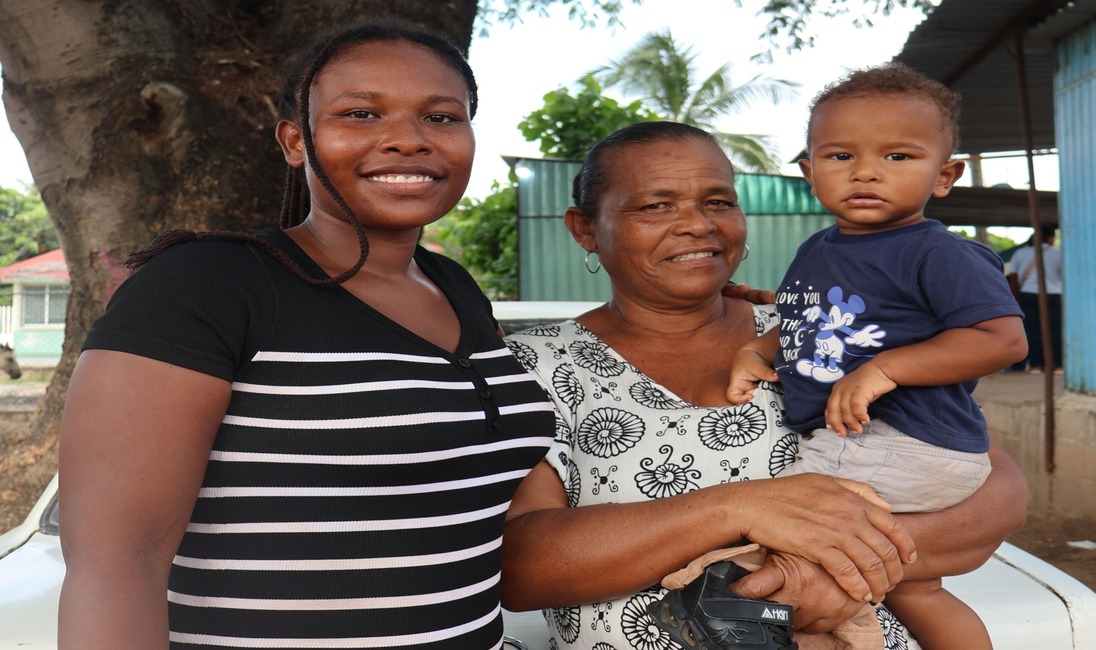
Move east into Guerrero and the same story keeps unfolding, just in a different register—
Not survival against a colonial ledger anymore, but survival across a family table.
This is what “audacity” looks like once it’s had five centuries to compound:
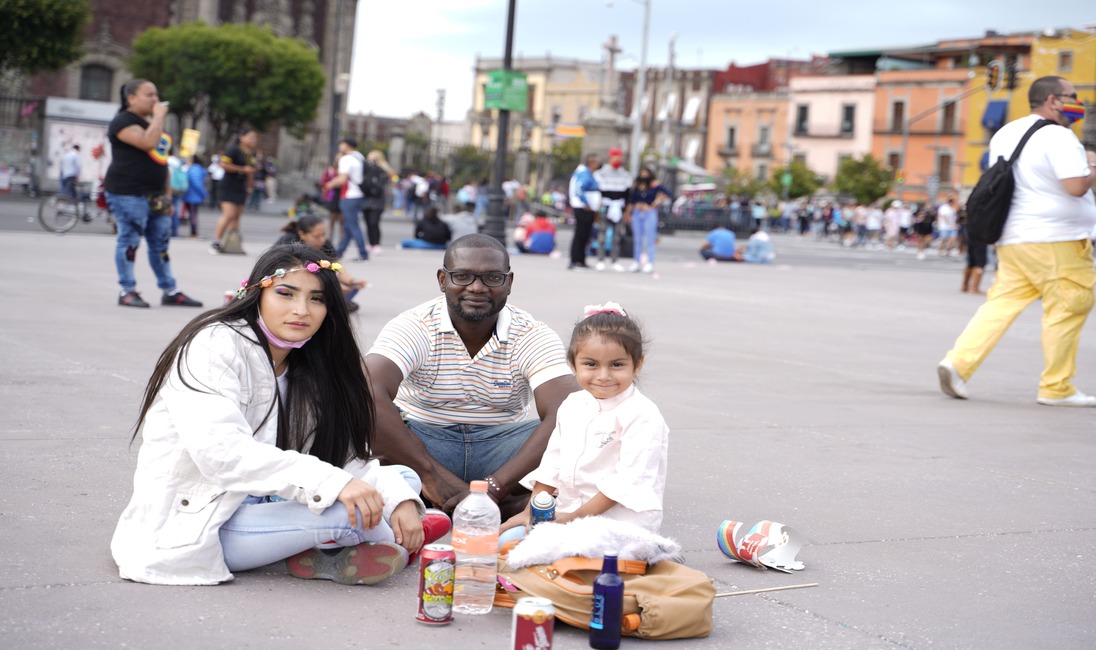
Not a single man’s negotiation, but three generations sitting in the same room.
A grandmother, a mother, a son. Juan Garrido never got to see this far down his own line. But we get to.
And the line doesn’t stop with the three of them. It branches—
Into cousins.
Into neighboring households.
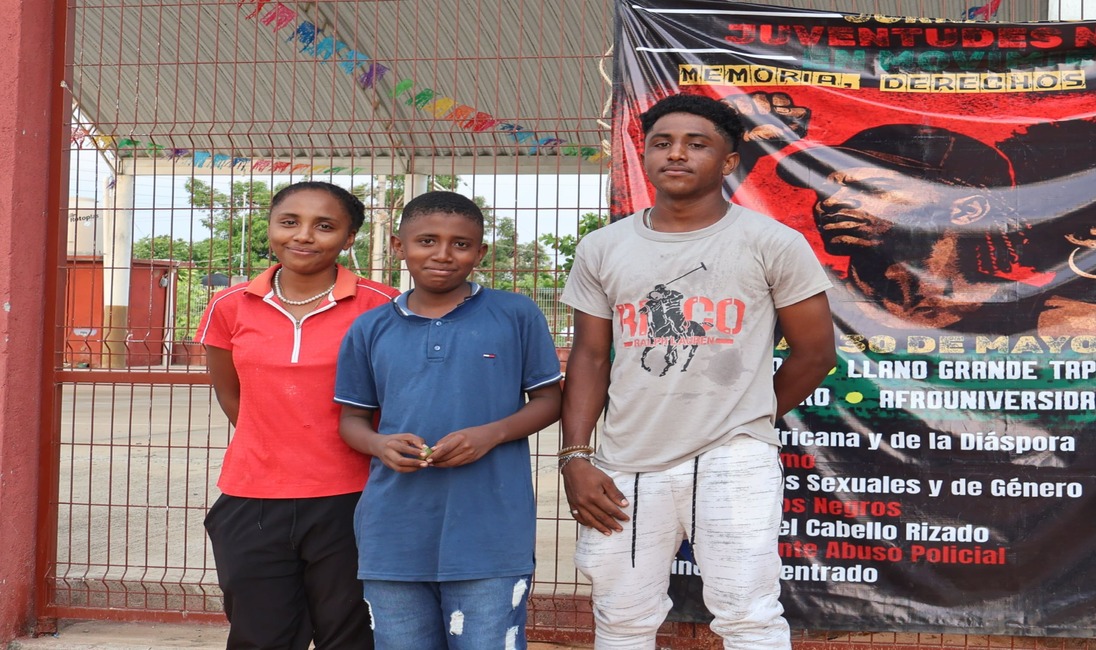
Into a whole community that still calls itself, and knows itself, as Black Mexican.
This is the harvest. Not metaphorical. Not historical. Sown in 1519, and still standing in a doorway in Guerrero in 2026.
So when the history books ask us to believe that Blackness in Mexico was a footnote —
A curiosity, a conquistador here, a name there — point them here instead. Point them to Oaxaca. Point them to Guerrero. Point them to the faces in this article.
The hands were always Black. They still are.
El Primer Libertador de América
Gaspar Yanga, a man who should have made a household name.
Believed to be of royal Gabonese lineage, Yanga escaped enslavement on a Veracruz sugarcane plantation in the 1570s and led a maroon community
— called palenque — deep in the mountains near Mount Orizaba.
When the Spanish crown sent hundreds of soldiers to crush him in 1609, Yanga’s people held their ground.
Nearly a decade of negotiation later,
In 1618, the Spanish crown did something almost unthinkable for its time:
It recognized Yanga’s settlement as a free, self-governed town.
San Lorenzo de los Negros was born — one of the first Black towns in the Americas, later renamed simply Yanga in his honor.
Today a statue of him stands in Veracruz, and locals still call him El Primer Libertador de America— The First Liberator of the Americas.
Say that name slowly.
Yanga was liberating people in the Americas two and a half centuries before anyone had heard of Abraham Lincoln.
And while Garrido and Yanga fought and farmed their way into the historical record, Juan Correa was busy painting his way into it.
Born around 1646 to a free Black woman and mixed-race physician, Correa became one of the most prolific and celebrated painters in all of New Spain, producing hundreds of religious works that still hang in Mexico City Cathedral today.
It was in that same city that I witnessed a Black saint painting.
Somewhere in a cathedral built to celebrate the glory of a colonial empire, a Black man’s brushstrokes were shaping what beauty was allowed to look like.
The National Gallery of Art in Washington did not acquire its first work by an artist of color until 2024 — and when it finally did, it was a painting by Juan Correa.
Nearly three hundred years after his death, the man is still opening doors.
The Ideas He Fought For, Woven Into Every Thread
If Garrido planted the seed and Yanga built the town, Vicente Guerrero built the nation.
Born to Afro-Indigenous roots and raised in the mountain barrio of Tixtla, Guerrero came up as a mule driver.
A trade the elite considered beneath them.
But one that made him beloved in the countryside.
Where muleteers carried news, songs, and jokes about the powerful from village to village.
Charismatic. Fluent in Indigenous languages.
Commander of the entire Mexican army.
Would help him rise through the ranks during Mexico’s brutal 1810-1821 war for independence.
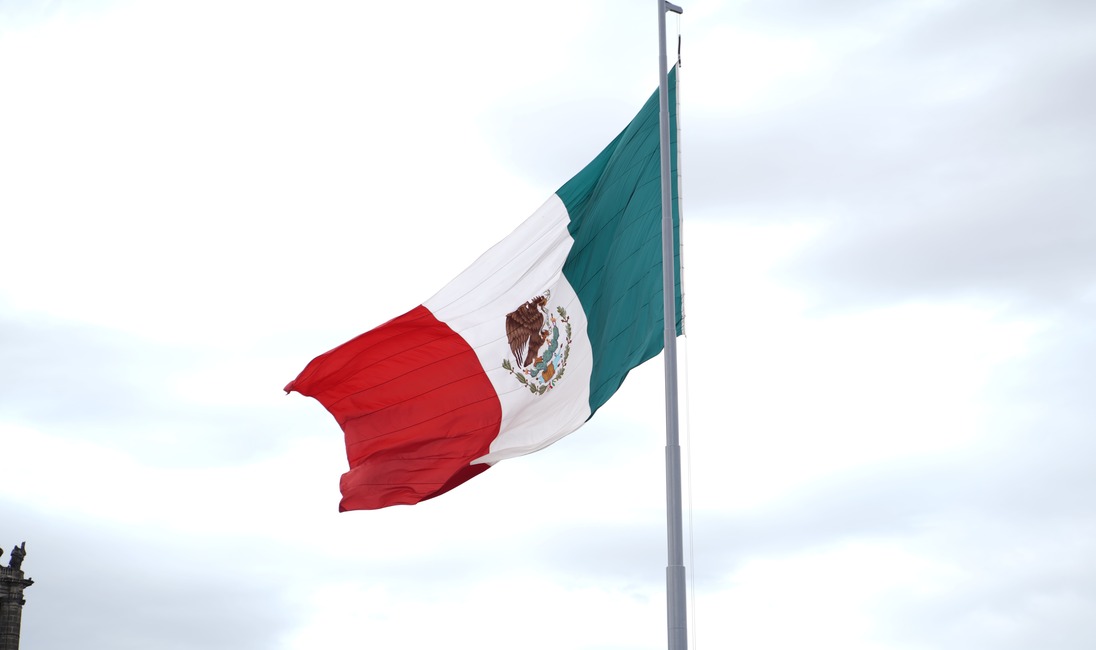
The author of the Mexican flag symbolism.
Guerrero didn’t design Mexico’s flag — but he helped forge the ideas behind it.
In 1821, alongside Iturbide, he co-signed the Plan of Iguala.
It declared the Three Guarantees that would define the tricolor:
Green - for independence
White - for faith
Red - for unity
These weren’t abstract words. They were what he and his companeros had bled for.
He didn’t paint the eagle or sew the fabric. But every time that flag rises, it carries the why he helped write into Mexico’s founding story
— the thread of a Black and Indigenous son of the revolution, woven into a nation’s identity.
Knowing these facts, all I could do was smile.
The universe clearly has a sense of humor, and Vicente Guerrero was the punchline nobody saw coming.
Spend your days hauling mules and cracking jokes about the powerful, and somehow, by 1829, you’re the powerful
— Mexico’s first Black and Indigenous president, sitting exactly where the elite swore a man like him never belonged.
One of his first orders of the day, Guerrero issued the country’s abolition of slavery — decades before the United States would fight a war over the same question.
His decree cost him the support of the wealthy elite who had only tolerated him.
In 1830, conservatives forced him from power, and in 1831 he was betrayed, kidnapped, handed off between mercenaries like contraband, and executed.
His final words to the firing squad were that whatever he had done, he had done in the interest of Mexico.
Patriotic.
Honorable.
Brave to the end.
Mexico’s own census recorded that by 1810, over ten percent of the population of New Spain was of African descent. Historian Ted Vincent notes that Afro-Mexicans had every reason to fight for independence, since early revolutionary leaders folded the abolition of slavery and the caste system directly into the cause.
Guerrero did not just participate in that story.
He was, in many ways, its author — and its price.
The Classroom Mirror: Teaching at the American School Foundation
Years later, long after my history books had introduced me to these men, I found myself living a much quieter chapter of Black life in Mexico City — teaching at the American School Foundation in 2016.
It remains one of the best professional opportunities I have had. The resources, the students, the culture of excellence — I do not take any of it for granted.
But something nagged at me the entire time I was there, the way a pebble nags at you from inside a shoe you cannot stop to fix.
I could count, on maybe one hand, the number of Black teachers in the building.
I could do the same with Black students.
I sat with that discomfort the way you sit with a joke that is not quite funny.
Here I was, in a country whose national identity was partly built by Black conquistadors, Black liberators, and Black painters…
Teaching in one of its most prestigious private institutions,
and still searching the hallways for faces that looked like mine.
It made me think of home — not Jamaica this time, but the United States.
And its own private schools, the ones with the manicured lawns and the tuition that costs more than some people’s entire rent for the year.
The pattern was familiar.
Wealth and whiteness have a way of finding each other across borders.
Dressing up in different flags. Different mascots. Different school songs.
Yet singing the same old tune.
If Black excellence built these nations.
Why does Black presence so often disappear from the rooms where that excellence is supposed to be cultivated?
I offer it as a question worth sitting with, the same way I sit with Garrido’s wheat, Yanga’s palenque, and Guerro’s decree. Access is not the same as belonging.
A seat at the table is not the same as being asked to help set it.
Where the Living Still Gather
Even so, Blackness in Mexico did not vanish with the history books, and it certainly did not vanish from my life there.
It gathered at Kaya, a reggae bar once tucked into the Condesa neighborhood, where I could hear my own island’s music echoing off Mexican bricks.
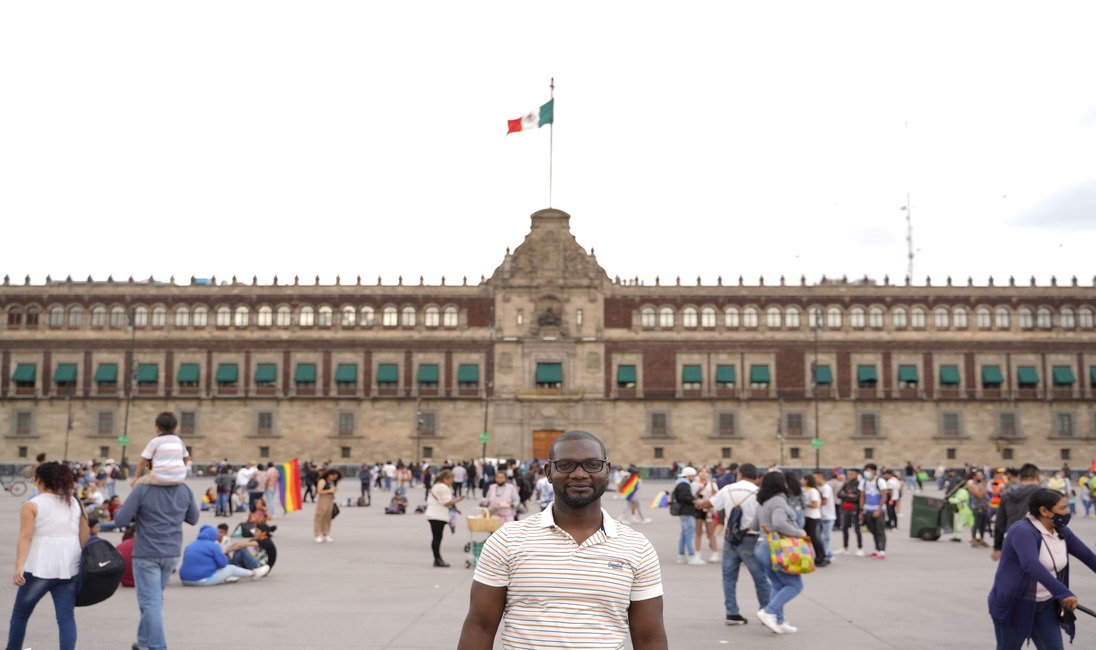
It gathered downtown in El Centro on lazy weekend afternoons, and in the green sprawl of Bosque de Chapultepec, where families of every shade came to breathe.
It gathered, more concentrated and more visible, along the coast in Veracruz.
It gathered in the mountain towns of Oaxaca, and in the Costa Chica region of Guerrero state — communities where Afro-Mexican identity is not a historical footnote but a living breathing Tuesday.
My humanity came alive in those spaces.
The same way it comes alive whenever the diaspora finds itself in a room together and does not have to explain why it is laughing so loud.
The Harvest, Still Growing
I think often about that closing line in Garrido’s petition
— that he sowed wheat here, at his own expense,
simply to see if it would take.
That is, in many ways, exactly what Unlocking Our Voices exists to do.
We plant Black diasporic stories in soil that history tried to salt over. We do not always know if they will take root in the way we hope.
But we plant them anyway, at our own expense of time, travel, and heart, because a nation’s memory should not depend on who was allowed to write it down.
Mexico’s Independence Day has arrived September 16th, one hundred and ninety five years after Guerrero’s death and two hundred and five years after the war he helped win.
The World Cup crowds have gone home.
But Garrido’s wheat is still growing, whether the country chooses to see the field or not.
I did not go to Mexico looking for Black history.
I went looking for home, and found that home had been quietly waiting there since 1519, wearing a conquistador’s armor, a maroon’s machete, a painter’s brush, and a president’s sash —asking, all along, only to be remembered.
Marcus Garvey and the Courage to See Ourselves: A Legacy I Carry Forward
Chae