

Marcus Garvey and the Courage to See Ourselves: A Legacy I Carry Forward
Marcus Garvey and the Courage to See Ourselves: A Legacy I Carry Forward
–by Greg Fuller, Founder of Unlocking Our Voices
The Man I had to Rediscover
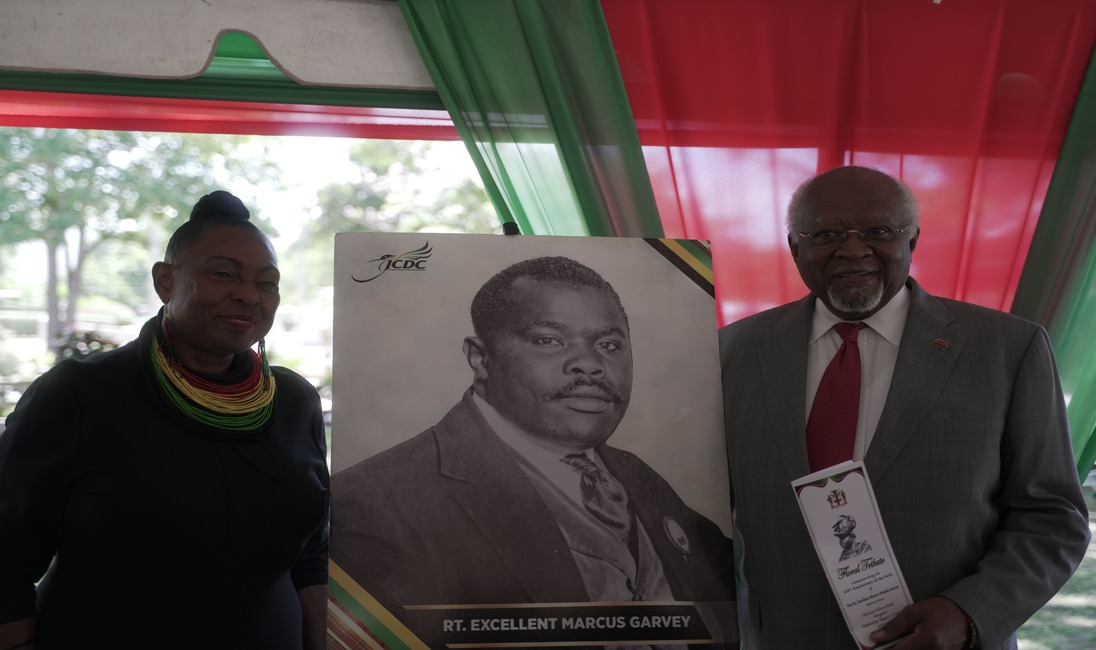
Every August 17, I am reminded that history is not merely a collection of dates, names, and photographs. History is memory with a pulse. This coming Monday, August 17, Marcus Mosiah Garvey’s birthday gives me another opportunity, as the founder of Unlocking Our Voices, to reflect on a Jamaican whose vision traveled far beyond the island where he was born and continues to challenge the African diaspora to see itself differently.
When I think about Marcus Garvey, I am struck by how close his story feels to my own. Garvey was born in St. Ann’s Bay, Jamaica, in 1887, nearly eighty years after my birth in Kingston, Jamaica. Yet across that distance in time, I hear an unmistakable echo: the conviction that we cannot truly be free until we believe in our own worth and claim the power to define our own future.
Garvey rose to prominence during a period when colonialism, racial segregation, and the legacies of slavery still shaped the lives of Black people across the world. After traveling through Central America, Europe, and Britain, he came to understand that the struggle of Black communities were not isolated–they were part of a global system of racial and economic domination. In 1914, he founded the Universal Negro Improvement Association and African Communities League–the UNIA–which would grow into one of the largest mass movements in Black history.
His message was bold, uncompromising, and deeply empowering: Black people had to believe in themselves, organize themselves, build their own institutions, and imagine a future in which they possessed the power to shape their own destiny.
Yet my relationship with Garvey did not begin in childhood.
I rediscovered him when I was in college at Rutgers University.
That rediscovery came through reading books about Malcolm X, and I cannot overstate the impact those books had on my life. Malcolm’s words opened doors in my mind, and behind those doors stood a much larger history. As I followed the intellectual and political influences that helped shape Malcolm X, I encountered Marcus Garvey again. Suddenly, this Jamaican man born decades before my own generation was speaking directly into questions I was still trying to understand: Who are we? What have we inherited? Why were we taught so little about ourselves? And what becomes possible when Black people stop seeing themselves through someone else’s definition?
When History Speaks Across Generations
One of the reasons Garvey remains so powerful is that he understood the psychological dimension of oppression. Political domination is one thing, but convincing a people to doubt their own worth is another.
Garvey confronted that second battle head-on.
He argued for Black self-respect, racial pride, economic independence, political organization, and a stronger connection between people of African descent around the world. His famous UNIA motto, “One God! One Aim! One Destiny!” expressed a vision of collective purpose across borders created by history, colonialism, and migration.
His message was not simply that Black people should survive.
It was that we should build.
That distinction matters to me.
Too often, the story of the African diaspora is told through suffering alone, colonialism, segregation, racism, displacement, and discrimination are essential parts of our history, but they are not the whole story. We were never merely victims of history. We were also builders of institutions, creators of culture, organizers of movements, entrepreneurs, educators, artists, parents, freedom fighters, and dreamers.
Garvey understood that dignity requires more than being tolerated. It requires the ability to define ourselves.
That is one of the reasons his legacy remains relevant to Unlocking Our Voices.
“Look for Me in the Whirlwind”
Garvey’s “Look for Me in the Whirlwind” speech has long resonated with me because it captures something larger than the life of one man. It speaks to legacy.
Garvey understood that movements cannot depend entirely upon the physical presence of their leaders. People die. Organizations change. Political conditions shift. But an idea can travel.
He called upon Black people to use their education and talents in service to the wider community. That principle forces me to ask myself what I am doing with what I have learned.
Education is not simply a personal possession.
It can be an inheritance.
That is part of why Unlocking Our Voices exists.
I do not want to collect Black stories like souvenirs.
I want to help keep them alive.
The Courage to Love Blackness
For me, that lesson is personal. The more I learned about Garvey, reclaiming history is not nostalgia. It is preparation for the future, because people who know themselves can imagine beyond the limits others impose.
Perhaps the most enduring part of Garvey's message for me is self-love.
He challenged Black people to see beauty in themselves and to reject the idea that whiteness was the standard against which Black humanity should be measured. In the language of his era, Garvey confronted practices such as skin bleaching and the internalized belief that Blackness needed to be corrected, softened, hidden, or made more acceptable.
That conversation is not finished.
I see it whenever colorism determines who is considered beautiful. I see it when African features are praised only after they have been filtered through somebody else’s standard. I see it when our children learn the names of European kings before they learn the names of African civilizations. I see it when Black history is reduced to a few familiar figures every February and then quietly placed back on the shelf.
Garvey’s answer was radical in its simplicity.
Love yourself.
Know yourself.
Build yourself.
One Diaspora, Many Histories
I do not believe Blackness is a single experience.
The African diaspora contains enormous diversity. I have seen that diversity across countries, cultures, languages, religions, and generations. Black Jamaicans, Black Americans, Ghanaians, Nigerians, Haitians, Brazilians, Afro-Latinos, Afro-Asians, and Black communities throughout the Caribbean and the Americas have histories that are distinct.
Garvey’s Pan-African vision challenges me to ask what connects us without pretending that our experiences are identical. Colonialism did not affect every society in the same way. The histories of slavery, migration, independence, segregation, colorism, and nation-building differ from place to place.
Unity does not mean uniformity.
It means recognizing that our differences can exist inside a larger story of connection.
That is the kind of connection I want Unlocking Our Voices to encourage.
Building Beyond Inspiration
It is easy to celebrate Garvey once a year.
It is harder to practice his challenge every day.
If I am to truly honor his legacy, I cannot stop at inspirational quotes. I have to ask what economic independence means in my community. I have to ask whether we support Black-owned businesses, institutions, educators, artists, journalists, filmmakers, and organizations doing meaningful work. I have to ask whether our children are being given a history broad enough to understand themselves.
Most importantly, I have to ask whether we are building institutions that can outlive us.
Garvey believed strongly in organization. The UNIA became a mass movement with chapters in numerous countries and promoted Black economic and political self-determination. Garvey also supported Black-owned enterprise and created the Black Star Line, an ambitious shipping venture intended to facilitate commerce and connections among people of African descent. The company ultimately ended amid financial and legal difficulties, but the larger idea remains instructive: liberation requires imagination, organization, and resources.
The Man, the Movement, and the Complications
I also believe that honoring Marcus Garvey requires honesty.
Garvey was a complicated historical figure. His politics, rhetoric, organization decisions, and conflicts with other Black leaders have been debated by historians. His relationship with racial separation, his political positions, and his conflicts with W.E.B. Du Bois remain important parts of understanding his legacy.
I do not believe honoring someone means pretending they were flawless.
We should be able to recognize both the power and the limitations of our historical figures. Garvey’s vision inspired millions, influenced later Pan-Africanists and Black nationalist thinkers, and helped make Black pride and self-determination central political questions. At the same time, we can examine where his strategies failed, where his judgments were flawed, and where his ideas created controversy.
That does not diminish history.
It deepens it.
Why Garvey Still Matters to Me
When I think about the young man I was at Rutgers discovering Malcolm X and through him, rediscovering Marcus Garvey, I realize I was not simply reading history .
I was searching for myself.
Garvey’s life reminds me that identity is not something I should receive passively.
It is something I must understand, protect, and continually define.
As the founder of Unlocking Our Voices, that responsibility feels personal.
Our name is intentional.
Unlocking a voice means unlocking memory.
It means creating room for Black people to tell their own stories rather than waiting for someone else to interpret them.
We are history.
And we are still making it.
A Birthday Becomes a Call to Action
So this August 17, I will not simply say, “Happy Birthday, Marcus Garvey”.
I will say thank you.
Thank you for reminding generations of Black people that our minds matter.
Thank you for insisting that self-respect is not a luxury.
Thank you for forcing us to confront the psychological wounds created by racism.
And thank you for leaving behind a legacy that gives us something to debate, something to learn from, and something to build upon.
But gratitude must become action.
My hope is that someone reading this will pick up a book about Garvey. Someone else will ask an elder about a family story. A parent will buy a Black history book for a child. A young entrepreneur will decide to build rather than simply consume. A student will discover that African history is larger than the narrow version presented in a textbook.
That is where Garvey’s legacy becomes alive again.
The Voice We Choose to Unlock
Marcus Garvey could not have known what the world would look like in 2026.
He could not have imagined social media, smartphones, global streaming, or the instant communication that allows a Jamaican in Kingston to speak with someone in Accra, Philadelphia, Johannesburg, Tokyo, or Sao Paulo within seconds.
But he understood something technology cannot create for us.
Connection without consciousness is not unity.
We can follow each other online and still remain strangers.
We can celebrate African culture and still misunderstand African history.
We can use the language of Pan-Africanism and still fail to support one another.
The work, therefore, is both external and internal.
We have to build relationships.
We have to learn history.
We have to challenge anti-Blackness, including the forms that appear within our own communities.
We have to support institutions that strengthen our people.
And we have to teach our children that Blackness is not a burden they were born to carry.
It is one part of a magnificent human story they have the right to know.
As I reflect on Marcus Garvey’s birthday, I return to the lesson that first reached me through those Malcolm X books at Rutgers: history can change the way you see yourself.
That is what happened to me.
And that is why I continue this work.
I founded Unlocking Our Voices because I believe our stories should not remain locked away in archives, memories, or the minds of elders who were never asked to speak.
Our voices belong in the world.
Garvey left us a challenge: believe in ourselves, organize, build, and refuse to surrender the power of define who we are.
My response is simple.
I will keep listening.
I will keep learning.
I will keep telling our stories.
And I will keep unlocking the voices.
Because the future of the African diaspora should never be written without us.
Kiswahili: The Language That Refused to Be Forgotten
Sowing Seeds of Memory: The Forgotten History of Afro-Mexicans
Teresa